
How to Design a Nursery That Grows With Your Child
A designer's guide to making intentional choices that you won’t have to re-do in two years.
One of the most common things I hear from clients before we begin designing their nursery is that they want the space to grow well with their child. And I completely understand why, because while the newborn stage is incredibly special, it’s also fleeting. So much nursery advice focuses on those early days, when all you really need is a quiet, comfortable place to feed, rock, and rest. But it doesn’t take long before your baby is pulling up on furniture, reaching for anything within arm’s length, and making their way across the room with a whole new sense of curiosity. When a space is designed only with a sleeping infant in mind, it can quickly start to feel out of step with the child who’s now living in it, which is why I always approach nursery design with the next stages in mind from the very beginning.
Designing a nursery with longevity in mind is genuinely achievable, and it doesn't require a bigger budget or a more complicated plan. It simply requires a slightly different, more intentional, way of thinking about the choices in front of you. Here is the framework I use with my own clients to help them create a room that feels just as beautiful and functional two years in as it does on day one.
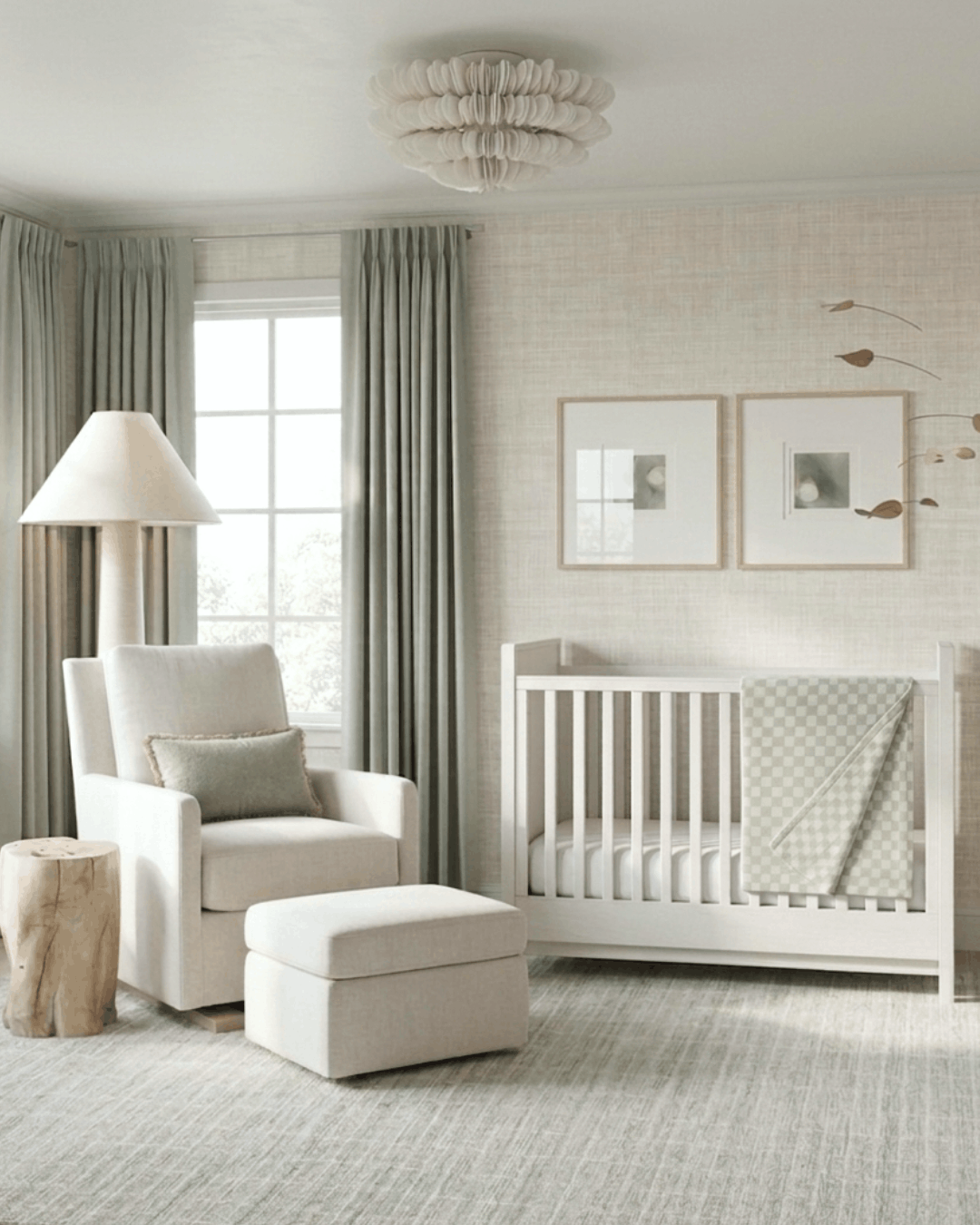
Client rendering
Begin with feeling, not a theme.
Before you look at a single piece of furniture or open a paint deck, I always encourage clients to start by identifying how they want the room to feel. Warm and enveloping? Calm and airy? Eclectic and colorful? This single question will do more to guide your decisions than any mood board or trend report, because a feeling is something the room can hold onto as it evolves.
Themed nurseries can be genuinely charming when done well, but a room built around woodland animals or celestial prints is essentially designed for one season of childhood. When the room is built around a feeling instead, it has so much more room to breathe and grow. The crib becomes a toddler bed, the nursing chair becomes a reading chair, the art changes, and yet the room still feels cohesive and intentional, because the feeling at its heart has remained the same.
Invest thoughtfully in the pieces that will stay.
Not every item in a nursery needs to be a long-term investment, the key is knowing which items are worth prioritizing.
In my experience, the crib and the dresser are the two pieces that genuinely earn a higher investment. A well-constructed crib that converts to a toddler bed and eventually a full bed is one of the most practical purchases you can make for a nursery, and a solid dresser can live in a child's room for decades (and eventually become an heirloom). These are the anchors of the space, and they are worth choosing with care. The glider also deserves some thought - will it live in the living room when your child has outgrown story time (sob!), or will it migrate to the primary bedroom or a future child’s room? If so, a neutral fabric and classic lines will give it longevity.
The smaller elements - including the accent pillow, the accessories, and the art, can shift as your child grows if necessary. Think of these as your flexible layer. Choose them with intention, but hold them a little more loosely, knowing that they are meant to evolve.
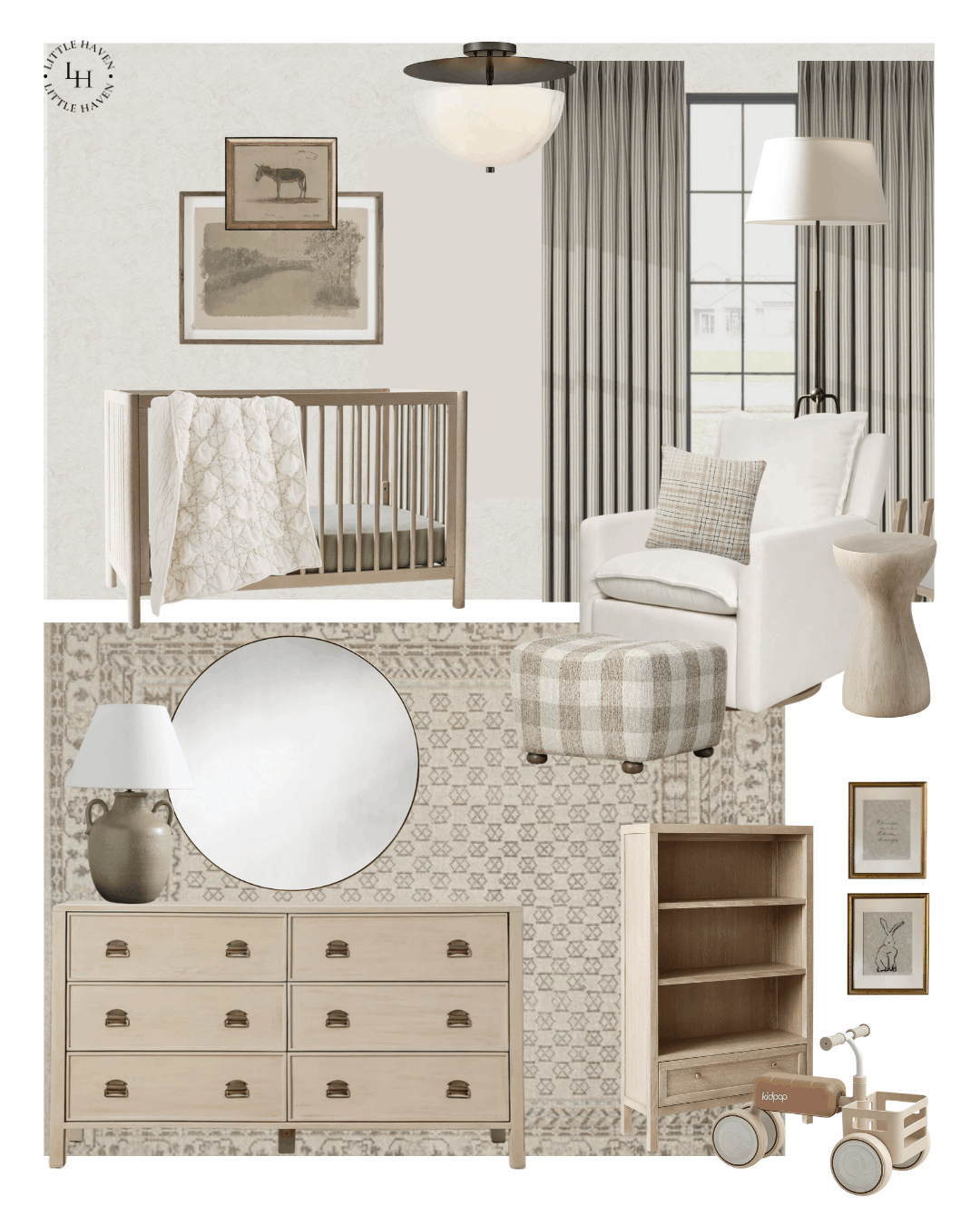
Client moodboard
Choose a color palette with staying power.
Color is one of the most exciting parts of designing a nursery, and it is also where rooms tend to date themselves most visibly. Color and pattern are where a nursery really begins to feel alive and personal, but can also be where many rooms start to tip into cutesy or cartoonish. The goal is not to avoid color or pattern, but to choose them with a little more intention so the room can evolve gracefully over time.
When it comes to choosing color, the shades that tend to age most beautifully are the ones with a bit of complexity to them. They are not overly crisp or bright, but slightly softened, with a sense of warmth and depth. Think of a blue-green with a touch of gray, a taupe that leans gently olive, or a blush that feels warm rather than overly sweet. These are the kinds of colors that settle into a home and continue to feel relevant as the room evolves.
If you prefer a more restrained palette, pairing one neutral with a single accent color can create a calm, grounded foundation. If you are drawn to a more layered look, a simple way to keep everything feeling balanced is to follow a 60-30-10 approach. Let one color lead across the room, introduce a secondary color to support it, and then bring in a smaller accent for contrast and interest. The result feels cohesive and intentional, without tipping into anything overly matched or one-dimensional.
Pattern works in a similar way. The styles that tend to stand the test of time are the classics. Stripes, florals, and plaids have been used for generations because they are familiar, versatile, and easy to reinterpret as a child grows. They feel collected rather than themed, which is exactly what you want.
If you love a layered look, mixing patterns is where things get especially interesting. The keys are variation, contrast and restraint. Start with one foundational fabric or pattern in a medium to larger scale to anchor the room (and color palette). Then bring in a second pattern that is noticeably smaller in scale and pattern structure to create contrast. Finally, add a solid to give the eye a place to rest. When done well, the mix feels thoughtful and relaxed, like it came together over time rather than all at once.
This is the kind of layering that gives a nursery depth and personality without locking it into a single moment. It leaves room for the space to grow right alongside your child, which is always the goal. I love layering in color through textiles and artwork, because those are the easiest elements to swap out later. A crib sheet, throw pillow, or crib quilt can shift the tone of the room without requiring a full redesign. It keeps things feeling fresh without starting over.
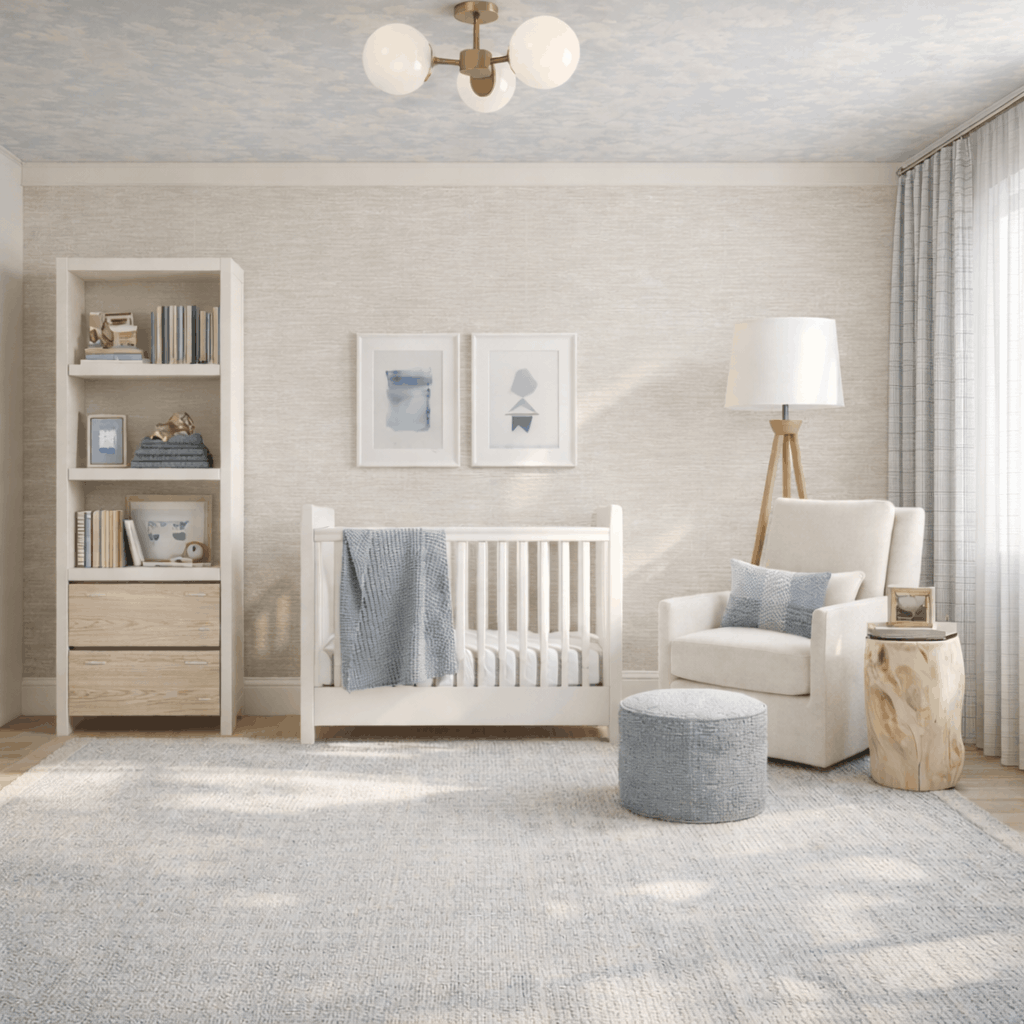
Client rendering
Design for the next three years, not just the first three months.
This is the shift that makes the biggest difference, and it is the one that is easiest to overlook when you are in the middle of preparing for a newborn. Most nursery planning naturally centers on the early months, which makes sense, because that is the season you can most clearly imagine. But a room designed exclusively for a newborn will feel overgrown sooner than you expect.
When you can hold both phases in mind at once, the still and tender newborn months alongside the curious and mobile toddler years, you start to make slightly different choices. You think about floor space for playing. You consider where the books will live as the collection grows. You choose a rug that can handle a little more life. None of these considerations take away from the softness and beauty of the newborn nursery -they simply ensure that the room has somewhere to go.
5. Consider Style, Personality, and Longevity
Selecting the right art involves more than just proportions and spacing, it’s an opportunity to bring a meaningful narrative to the nursery wall. Consider elements such as color palettes that complement your textiles or wallpaper, timeless themes like botanicals, classic animals, travel, sports or soft landscapes, and textures including linen mats, canvas, or wood and aged brass frames. Incorporating even a single sentimental piece can add a personal, thoughtful touch. You don’t need to over-theme the room; a few well-chosen, intentional pieces are all it takes to create a cohesive and inviting space.
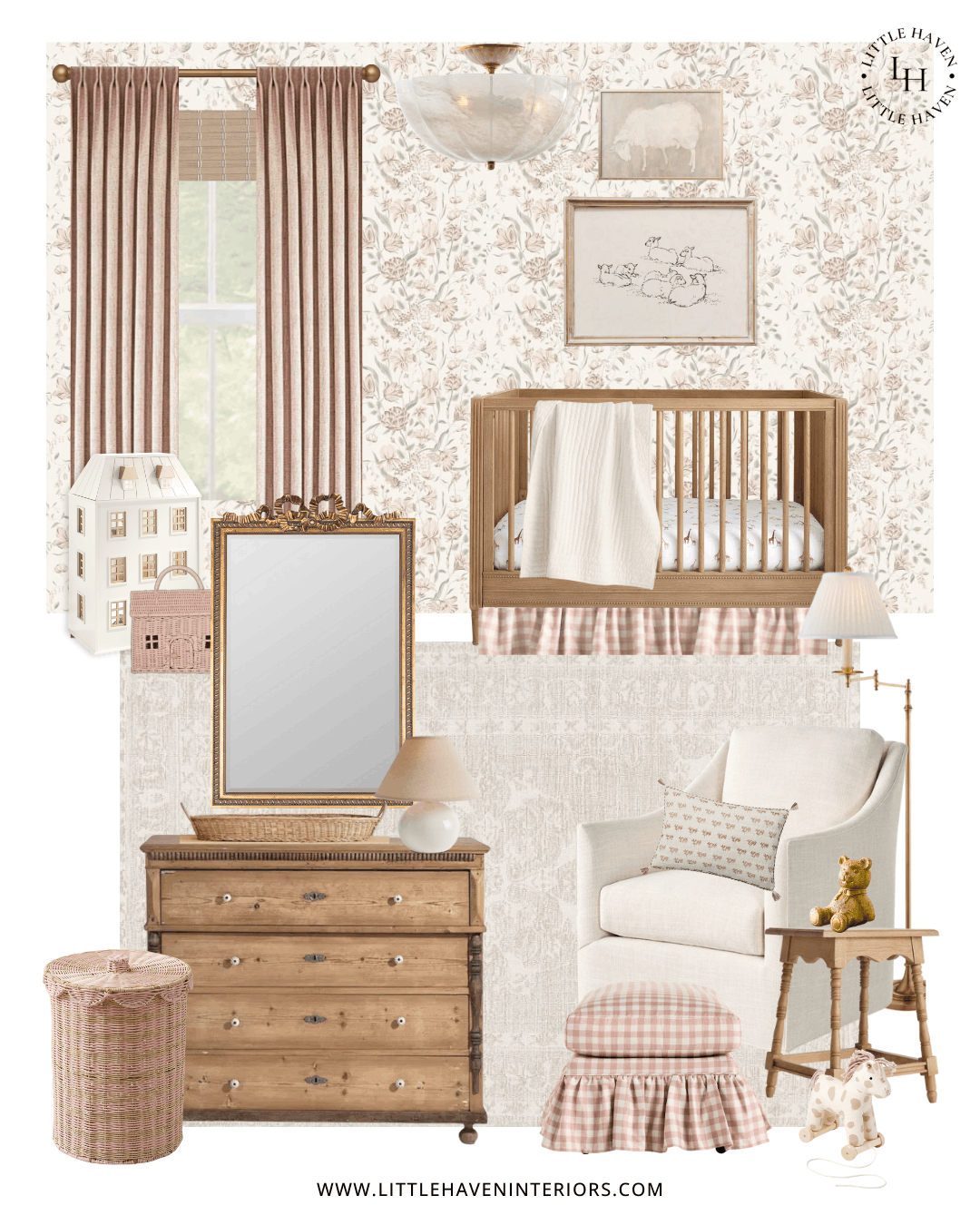
Client moodboard
Layer in meaning with sentimental and nostalgic pieces.
Longevity in a nursery is not only about what lasts physically. It is also about what lasts emotionally. The rooms that feel truly special over time are almost always the ones that carry a personal narrative, where a few carefully chosen pieces tell a story about the family who lives there.
This does not require a grand gesture or a perfectly curated collection. It can be as simple as a vintage botanical print that reminds you of a place you love, a small framed piece passed down from a grandparent, or a hand-stitched textile that you felt an immediate connection to. Timeless themes, like botanicals, classic animals, soft landscapes, or motifs tied to travel or sport, tend to wear beautifully over the years because they are meaningful to your family, not the trend cycle. Even a single sentimental piece, tucked among more neutral choices, can give a nursery a sense of history and heart that makes it feel genuinely irreplaceable.
I hope this gives you a clearer, more confident starting point as you plan your nursery. Designing this room is such a meaningful part of welcoming your baby, and you deserve to feel supported and excited throughout the entire process, not overwhelmed by it.
